
By Joni Prescher
Share
At ECMS, we know that some of the most meaningful learning happens in the everyday moments of a child's day.
From arriving in the morning to sitting down for lunch, children find their hats, look after their belongings, wash their hands, pack up, take turns, help a friend, move from one activity to another and eventually get ready to head home. For children in early childhood education and care, there are also many moments of care throughout the day – eating, dressing, changing, resting and settling.
Because these things happen every day, it can be easy to just see them as routines – the things that need to happen. But when you look a little closer, there is something extraordinary happening in the care, connection and learning in these everyday moments.
A baby or toddler whose educator talks to them and gently lets them know what is happening during a nappy change is learning about trust, communication and consent. A child working out how to manage their own zip is learning to keep trying and do things for themselves. Children packing away something they've built together are working together and solving problems. And talking together over lunch can help an educator discover a new interest, idea or connection.
These aren't simply the moments between learning. They are learning.
The things we do every day
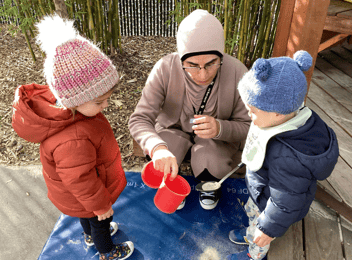
For babies and toddlers, this can be easier to see. Much of their day is made up of everyday care – eating, changing, resting and moving from one activity to another.
At ECMS, we talk about attunement – paying close attention to each child, noticing what they say and do, how they respond and what they might need.
As early childhood researcher Dr Katherine Bussey reminds us, “Respectful attuned relationships are not just desirable, they are key to the curriculum” (Bussey, 2024).
A nappy change, for example, can be a moment of connection, communication and trust. An educator can let a child know what is about to happen, notice how they respond, talk with them and support them to take part in their own care.
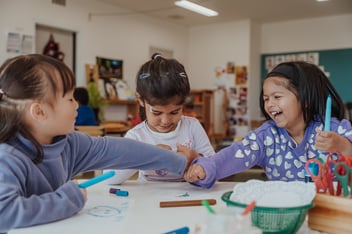
As children grow, the routines change, but these opportunities continue. A child in kindergarten might need time to put on their own shoes, help a friend, take turns, work something out for themselves or know when to ask for help.
Across every age, these everyday moments help our educators get to know each child – what they enjoy, how they communicate and when they need support. They also help children see themselves as capable, connected and an important part of their group.
Noticing, waiting and giving a child time
On a busy day, it can be tempting to step in. We can do up the zip faster. Pick up a baby for a nappy change before letting them know what is happening. Find the missing drink bottle. Carry the bag. Solve the disagreement. Move everyone on because we already know what needs to happen next.
Being attuned sometimes means we do things a bit differently, by noticing, waiting and giving a child time.
What would happen if we gave them another moment to understand what is happening, have another go, ask a friend for help, try something different or show us what they need?
This isn't about making routines last longer. It is about also noticing the learning and relationships already happening throughout a child's day. Our educators think about what each child needs – when to help, when to stay close and support them, and when to give them space to try for themselves.
This approach reflects Australia's Early Years Learning Framework V2.0, which recognises relationships, children's voices and choices, and thoughtful teaching as important parts of how children learn.
It is also part of how we approach learning at ECMS. Our educators build strong relationships with children and take time to notice, listen and respond. They see children's learning not only in the planned activities and experiences, but in play, care, talking together, relationships and the many small moments that make up a child's day.
The opportunity is not always to plan something new, but to notice the learning that is already happening.
Across our early learning centres and kindergartens, we want every child to feel known, heard and supported to take an active part in their day. By giving these everyday moments our attention, we create more opportunities for children to build trust, confidence, independence and a strong sense of belonging – while learning along the way.
References
Australian Government Department of Education. (2022). Belonging, Being & Becoming: The Early Years Learning Framework for Australia – (V2.0). Canberra: Australian Government.
Bussey, K. (2024). Presentation at the Infants and Toddlers: Practice, Pedagogy and Research Conference, Macquarie University.
ECMS. (2024). Attuned and Responsive Practice: ECMS Birth to Three Project.